
For centuries, dentists have relied on traditional impression materials and plaster models to capture the shape of a patient’s oral cavity. While this method has been widely used, it often faces challenges such as material distortion, temperature sensitivity, and storage difficulties. Moreover, patients frequently experience discomfort during the impression process.
With the advancement of digital dentistry, digital impression technology has revolutionized the way dental professionals capture oral data. It enables more accurate, efficient, and comfortable workflows for both clinics and laboratories.
Digital impression technology refers to the process of using digital scanning equipment to record the three-dimensional structure of the teeth, gums, and surrounding tissues. The scanned data forms a digital model that can be directly used for designing and manufacturing dental restorations through CAD/CAM systems.
In practice, there are two main methods: indirect scanning and direct intraoral scanning.
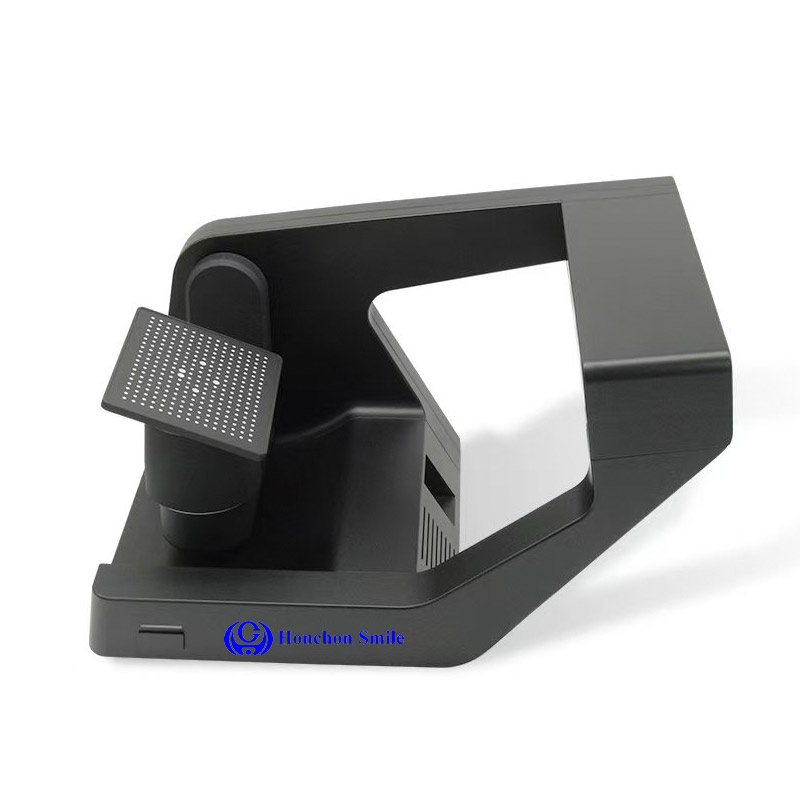
The indirect approach involves scanning a physical model or an impression using a laboratory scanner. It is a non-contact optical 3D measurement process, usually based on laser or structured-light technology, with an accuracy that can reach the micrometer level.
This method is often used in dental labs where technicians digitize existing plaster models to create restorations such as crowns, bridges, or implant abutments.

The direct method uses an intraoral scanner placed inside the patient’s mouth to capture the digital impression in real time. This eliminates the need for traditional impression materials and stone models.
By scanning directly in the oral cavity, clinicians can obtain highly accurate digital data instantly. It reduces patient discomfort, shortens chair time, and minimizes errors caused by material deformation or manual handling.
For manufacturers like HONCHON, this digital data becomes the foundation of a fully digital workflow—from design to milling—ensuring precision in every step of the restoration process.
Digital impression systems are now an essential part of restorative and implant dentistry. Their growing popularity comes from the clear benefits they offer.
High accuracy and repeatability: Digital scans provide consistent and detailed surface data that are difficult to achieve with traditional impressions.
Patient comfort: The elimination of impression trays and materials makes the process more pleasant and less invasive.
Faster workflow: Scanned data can be transferred instantly to dental labs, reducing turnaround time.
Reduced material waste: No impression materials, stone, or physical models are required.
Easy data storage and sharing: Digital files can be saved, duplicated, and transmitted conveniently for consultation and record keeping.
Seamless CAD/CAM integration: The data can be directly imported into design software and milling machines for precision manufacturing.
Despite the advantages, digital impression technology also has technical limitations.
The intraoral environment—saliva, tongue movement, and patient motion—can affect scanning accuracy.
The operator’s experience influences the quality of the scan.
The cost of equipment and the learning curve may be higher for new users.
Multi-scan data sometimes require precise calibration and coordinate alignment for accurate 3D reconstruction.
Nevertheless, as technology continues to improve, newer systems are overcoming these challenges with faster scanning speeds, improved image stitching algorithms, and enhanced accuracy.
Digital impression technology is widely used in multiple restorative fields. It enables a digital workflow that connects clinics, dental labs, and manufacturing systems seamlessly.
For crowns, veneers, and bridges, digital scanning ensures precise occlusion and anatomy. Digital design software allows technicians to create restorations that match natural tooth color and shape.
When combined with HONCHON zirconia blocks, these restorations achieve both strength and translucency, meeting aesthetic and functional needs.
In implant dentistry, digital impressions help capture the exact position and angulation of implants, as well as the surrounding soft tissue. This accuracy is crucial for designing abutments and implant-supported crowns.
Digital workflows improve communication between clinicians and labs, reducing errors and ensuring that the final restoration fits perfectly.
For edentulous patients, digital impression technology allows accurate recording of the soft tissue and bone structure. When combined with guided surgery and CAD/CAM fabrication, it enhances the fit and stability of full dentures or implant-supported prostheses.
Digital impressions form the starting point of a fully integrated CAD/CAM process—scanning, designing, milling, and sintering.
With HONCHON’s dental milling burs and zirconia discs, digital data can be transformed into highly precise restorations with minimal material waste and outstanding reproducibility.
As digital technologies continue to evolve, digital impression systems are expected to become faster, more accurate, and more user-friendly.
The integration of AI design tools, cloud-based data sharing, and automated milling systems will further enhance the efficiency of digital workflows.
From a manufacturing perspective, the cooperation between equipment makers, material suppliers, and dental professionals will be the key to ensuring consistency and precision across the entire restorative process.
HONCHON, as a professional manufacturer of dental zirconia blocks, milling burs, and digital materials, is committed to supporting the global shift toward fully digital dentistry. By combining advanced materials, precise engineering, and reliable service, HONCHON helps clinics and labs build smoother, smarter, and more predictable restorative workflows.
Digital impression technology represents a milestone in modern restorative dentistry. It transforms how clinicians capture, design, and manufacture restorations—making treatments more comfortable, efficient, and precise.
As dental professionals and manufacturers continue to embrace this technology, the collaboration between digital equipment, materials, and expertise will define the next era of restorative excellence.


